
Top 10 Enamel Badge Types for Global Buyers

Time:2026-10-20 Author:Amelia
0%

Choosing the right Enamel Badge is rarely a simple matter of appearance. Global buyers must balance design, durability, production cost, and customer expectations. A bright badge may look impressive in a product photo, yet its color can appear different under warehouse lighting. Small details matter.

This guide examines ten practical Enamel Badge types commonly considered by international buyers. It compares hard enamel, soft enamel, printed enamel, glitter finishes, translucent colors, and other popular options. Each type offers a different surface feel, visual effect, and level of detail. Hard enamel provides a smooth, polished finish. Soft enamel creates visible recessed lines and a more tactile surface. Printed details can support complex artwork, but they may require careful quality checks.

Experience shows that artwork approval is only one part of the process. Buyers should review metal thickness, plating, attachment methods, color references, sample accuracy, packaging, and minimum order quantities. Supplier communication also deserves attention. Clear drawings and written specifications reduce avoidable revisions. Compliance requirements may vary by destination, especially for children’s products, promotional goods, and accessories that contact skin.

There is no perfect badge for every market. That point is often overlooked. A low unit price may bring higher replacement costs if plating scratches easily or pins bend during shipping. Reliable sourcing depends on realistic testing, documented inspections, and transparent supplier claims. The following selection is designed to help distributors, retailers, event planners, and private-label brands compare options with greater confidence. Some recommendations may still need adjustment after sampling, because real-world results can differ from catalog images.
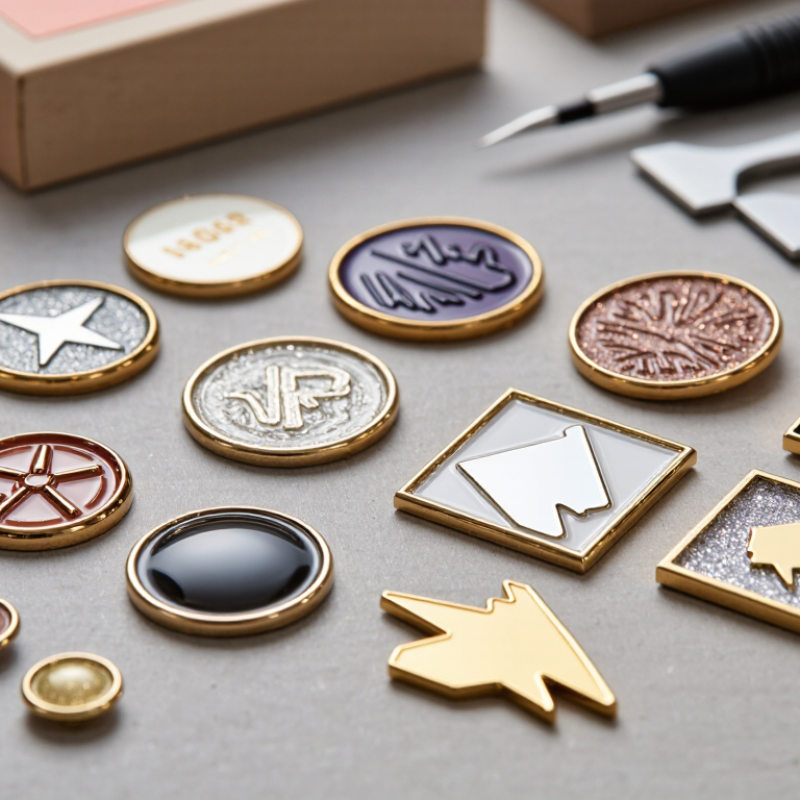
Top 10 Enamel Badge Types for Global Buyers

What Enamel Badges Are and How Global Buyers Classify Them

Top 10 Enamel Badge Types for Global Buyers

Enamel badges are small metal pieces filled with colored glass-like enamel. Global buyers classify them by finish, metal base, shape, and attachment. The ten common types include soft enamel, hard enamel, glitter enamel, glow enamel, transparent enamel, printed enamel, die-struck enamel, 3D enamel, cut-out enamel, and photo-etched enamel. These labels can overlap. That creates confusion.

Soft enamel has visible recessed lines and a textured surface. Hard enamel feels smooth and polished after filling and leveling. Glitter and glow versions add visual effects, while transparent enamel reveals part of the metal base.

Die-struck and cut-out styles emphasize metal structure. 3D and photo-etched badges add depth or fine details. Buyers should also classify backing options, such as butterfly clutches, rubber fasteners, magnets, or safety pins.

PPAI’s 2024 market report estimated the promotional products industry at more than 26 billion dollars in annual sales. This scale supports continued demand for compact, customizable merchandise, including enamel badges. Grand View Research also reported steady growth in the global custom pins market, linked to personal expression and event promotion.

Report definitions vary, however. Some studies group badges with pins and accessories, so direct comparisons remain imperfect. A careful buyer should request a metal sample, color chart, plating specification, and production tolerance before approving bulk orders. Even experienced buyers sometimes classify a glossy soft-enamel badge as hard enamel. It looks close.

Soft Enamel Badges: Features, Uses, and Buyer Considerations

Among the ten enamel badge types, soft enamel badges remain popular with global buyers. Their recessed lines create a textured surface, while raised metal borders define each color area. This contrast gives logos, event symbols, and club designs a clear appearance. The finish also feels more tactile than a flat printed badge. Small flaws matter.

From production experience, buyers should confirm artwork, metal color, enamel shade, backing type, and size before ordering. A 25–32 millimeter badge often balances visibility and comfortable wear. Pin backs suit clothing, while magnetic backs may reduce fabric damage. Buyers should request a physical sample when color accuracy is important. Digital previews can look brighter than finished enamel.

Soft enamel is practical for uniforms, conferences, community groups, packaging inserts, and collectible sets. It usually offers a lower cost than hard enamel, especially for detailed color layouts. However, the surface may collect dust in recessed areas, and exposed metal can show scratches with heavy use. Ask about plating, edge quality, color consistency, and inspection standards. A clear production tolerance should be written into the order. I once underestimated how strongly lighting changed a blue enamel tone. That was avoidable. Careful buyers compare samples under neutral light and inspect several pieces, not just one.

Hard Enamel Badges: Finish Quality, Durability, and Applications

Among the top ten enamel badge types, hard enamel badges stand out for their smooth, glass-like finish. The colored enamel fills each recessed area completely. After curing, the surface is polished level with the metal lines. Quality begins with accurate artwork and controlled color matching. During sample inspection, check edges under neutral light. Uneven borders or tiny pinholes can become obvious in bulk production. Small details matter.

Durability depends on more than appearance. A reliable badge should have clean metal plating, firm pin attachments, and well-cured enamel. Ask for samples before approving a large order. Useful checks include gentle rubbing, repeated handling, and inspection after moisture exposure. These checks are simple, but they reveal weak adhesion and rough polishing. No finish is perfect. Very thin lines may soften during polishing, so artwork sometimes needs revision.

Hard enamel badges suit uniforms, event credentials, association gifts, and premium merchandise. Their flat surface is easy to wipe and resists ordinary wear better than raised soft enamel. They also photograph clearly under bright lighting. However, they often require tighter production control and may cost more. Fine color differences can still appear between batches. Buyers should record approved colors, plating tone, dimensions, and backing details in writing. A missed specification can create unnecessary rework.

Top 10 Enamel Badge Types for Global Buyers

Hard enamel badge formats ranked by finish quality, durability, and application suitability.

The index uses a 100-point comparative benchmark: 40% polished finish quality, 35% resistance to wear and corrosion, and 25% application versatility. Hard enamel badges score highly because the enamel is filled level with the metal lines and polished to a smooth, durable surface.

Specialty Enamel Badge Types for Branding, Events, and Collectors

For global buyers, specialty enamel badges turn small metal surfaces into portable brand cues.
Soft enamel badges offer recessed lines and tactile color, while hard enamel creates a smooth, jewelry-like face.
Glitter enamel adds movement under event lighting.
Glow enamel supports evening visibility, but color testing remains essential.

A pale glow may disappear in daylight. That detail is easy to miss.

The 2024 PPAI market report valued U.S. promotional-product sales at approximately $26.6 billion in 2023. This scale signals strong demand for reusable event merchandise.

ASI’s 2023 Ad Impressions Study found promotional writing instruments generated 3,441 impressions on average. Badges are smaller, yet repeated wear can extend exposure beyond the venue.

For branding, use two or three colors, clear edge spacing, and a readable silhouette. For conferences, add date-specific back cards or numbered editions. Collectors often prefer die-struck details, limited runs, and consistent numbering.

Production experience suggests checking artwork at actual badge size, not only on a large screen. Fine lines can merge after plating or filling. Ask for a physical sample, metal finish confirmation, and color chip before approval.

Hard enamel may cost more. Soft enamel may feel more expressive. I sometimes favor complex effects too quickly. Simpler badges often travel better, photograph better, and age more honestly. Quality records should include tolerance notes, attachment strength, packaging, and inspection photos.

How to Compare Enamel Badges by Design, Production, and Cost

Top 10 Enamel Badge Types for Global Buyers

Choosing enamel badges requires more than comparing unit prices. Soft enamel badges offer recessed lines, vivid color, and lower tooling costs. Hard enamel creates a smooth, polished surface for premium designs. Die-struck, glitter, glow, printed, 3D, cut-out, and recycled-metal options suit different visual and budget needs.

The 2023 Ad Impressions Study by the Advertising Specialty Institute reported that promotional products generated billions of daily impressions, with an average cost per impression near half a cent. This supports badges as long-term promotional items, but only when plating and attachment quality remain reliable. Grand View Research projected steady growth for the global enamel pins market through 2030, reflecting continued demand for compact, collectible accessories.

Production details can change the final quote sharply. A design with four colors, a 25-millimeter size, butterfly backing, and 500 pieces is easier to price than a custom 3D mold. Ask about mold fees, proofing, color matching, plating, packaging, and defect allowances. Copper usually supports fine lines, while iron can reduce costs but may feel heavier. A low quotation can hide weak plating or loose backings. That happens.

In practical sourcing, request a physical sample before approving bulk production. Compare edge sharpness, color filling, surface scratches, and clasp tension under normal handling. Digital proofs are useful, but imperfect. They cannot fully predict metal reflections or color shifts. Consider that before ordering thousands.

Top 10 Enamel Badge Types for Global Buyers - How to Compare Enamel Badges by Design, Production, and Cost

Practical comparison of common enamel badge constructions, production characteristics, and indicative wholesale pricing.

No. Badge Type Design Appearance Typical Thickness Common Finish Production Method Typical MOQ Typical Lead Time Approx. Cost at 100 pcs Approx. Cost at 1,000 pcs Durability Best Use
1 Soft Enamel Badge Recessed colored enamel with raised metal borders; textured surface. 1.0–1.5 mm Gold, silver, black nickel, antique, or colored plating. Stamped or die-cast metal, enamel filling, oven curing, polishing. 50–100 pcs 10–18 working days US$1.20–3.50 US$0.35–1.20 Good; raised details may catch on fabric. Promotional pins, clubs, events, uniforms, and retail souvenirs.
2 Hard Enamel Badge Smooth, level enamel surface with a polished jewelry-like appearance. 1.2–2.0 mm Polished gold, silver, black nickel, or antique plating. Metal stamping, multiple enamel fills, firing, grinding, and polishing. 50–100 pcs 15–25 working days US$1.80–5.00 US$0.55–1.80 Very good; smooth surface resists dirt and abrasion. Premium merchandise, recognition pins, fashion accessories, and collectibles.
3 Die-Struck Enamel-Filled Badge Crisp recessed lines and strong metal definition with selected enamel areas. 1.0–1.5 mm Bright, satin, brushed, or antique metal finish. Forged or stamped metal base with partial soft or hard enamel filling. 50–100 pcs 12–20 working days US$1.50–4.20 US$0.45–1.45 Very good; metal relief protects the design. Heraldic designs, institutional badges, medals, and premium promotional items.
4 3D Molded Enamel Badge Raised or sculpted surface with dimensional lettering, figures, or symbols. 2.0–5.0 mm Painted, plated, antique, or mixed metal finish. Custom 3D mold or die-casting, hand filling, and curing. 100–200 pcs 18–30 working days US$2.80–8.00 US$1.00–3.20 Excellent; thicker construction handles frequent handling. Character badges, automotive themes, gaming merchandise, and collector items.
5 Glitter Enamel Badge Reflective glitter particles embedded in selected enamel sections. 1.2–2.0 mm Bright gold, silver, holographic, or colored glitter effect. Stamped base, glitter-enamel filling, curing, and surface finishing. 50–100 pcs 15–25 working days US$1.80–5.20 US$0.65–2.00 Good; glitter appearance depends on a well-sealed surface. Music events, fashion products, seasonal campaigns, and youth-oriented designs.
6 Glow-in-the-Dark Enamel Badge Colored by day and luminous after exposure to natural or artificial light. 1.2–2.0 mm Polished, matte, antique, or dark-colored metal plating. Metal stamping, phosphorescent enamel filling, curing, and polishing. 50–100 pcs 15–25 working days US$2.00–5.50 US$0.70–2.20 Good; glow intensity gradually decreases as the material discharges. Night events, safety-themed campaigns, entertainment, and novelty merchandise.
7 Translucent Enamel Badge Semi-transparent color allows the metal texture or engraved details to show through. 1.0–1.8 mm Polished or brushed metal, often combined with selective plating. Engraved or stamped base with translucent enamel filling and controlled curing. 50–100 pcs 15–25 working days US$1.80–5.00 US$0.60–1.90 Very good when properly cured; color depth may vary by metal base. Premium graphic designs, abstract artwork, jewelry-style pins, and limited editions.
8 Offset-Printed Enamel Badge Fine lines, gradients, small text, and photographic artwork printed over an enamel base. 1.0–1.8 mm Gloss, matte, epoxy-coated, or selective metal finish. Stamped metal, enamel background, offset or digital printing, and protective coating. 100–200 pcs 15–28 working days US$2.00–6.00 US$0.75–2.40 Moderate to good; printed details benefit from a clear protective coating. Illustrations, portraits, small text, complex logos, and multicolor artwork.
9 Cut-Out or Openwork Enamel Badge Negative spaces are cut through the metal to create a lightweight, decorative outline. 1.0–1.8 mm Polished, satin, antique, black nickel, or mixed plating. Precision stamping, laser cutting, or CNC cutting followed by enamel filling. 100–200 pcs 18–30 working days US$2.20–6.50 US$0.80–2.70 Very good; narrow connecting sections require careful handling. Minimalist graphics, lettering, botanical designs, and lightweight accessories.
10 Antique Metal Enamel Badge Enamel colors are contrasted with darkened recessed metal for a vintage appearance. 1.0–2.0 mm Antique gold, antique silver, antique copper, or antique brass. Stamped metal, chemical antique treatment, enamel filling, curing, and polishing. 50–100 pcs 15–25 working days US$1.60–4.80 US$0.55–1.90 Very good; the aged finish hides minor surface marks. Heritage themes, outdoor clubs, historical designs, apparel, and souvenir programs.

Pricing basis: Indicative wholesale prices in US dollars for approximately 25–35 mm badges, standard pin backing, one-sided artwork, and ordinary packaging. Prices exclude freight, duties, taxes, special packaging, and tooling charges.

Lead-time basis: Estimated production time after artwork approval and payment of any tooling charge. Actual costs and schedules vary with size, metal type, number of colors, plating, packaging, inspection requirements, and order quantity.

FAQS

What are enamel badges?

Enamel badges are small metal pieces filled with colored, glass-like enamel. They often include pins, magnets, or safety-pin attachments.

How are enamel badges commonly classified?

Buyers classify them by finish, metal base, shape, color effect, and attachment method. These categories can overlap.

What is the difference between soft and hard enamel?

Soft enamel has recessed lines and a textured surface. Hard enamel is filled level and feels smooth after polishing.

Which badge type suits detailed designs?

Copper supports fine lines and small details. Photo-etched, 3D, and cut-out styles can add depth or exposed metal areas.

How do glitter, glow, and transparent enamel differ?

Glitter enamel contains reflective particles. Glow enamel creates visibility in darker settings. Transparent enamel reveals part of the metal base.

Which backing options can buyers choose?

Common options include butterfly clutches, rubber fasteners, magnets, and safety pins. Clasp tension matters during normal handling.

What details should be included in a production quotation?

Request costs for molds, proofing, color matching, plating, packaging, and defect allowances. Include size, quantity, colors, and backing type.

Why should buyers request a physical sample?

A sample reveals edge sharpness, scratches, color filling, plating quality, and clasp tension. Digital proofs cannot show every reflection or color shift.

How can buyers avoid confusing glossy soft enamel with hard enamel?

Check the surface level and texture by touch. A glossy appearance alone does not prove the badge is hard enamel.

Why can a low quotation be risky?

A low price may hide weak plating, loose backings, or limited quality control. Classification and pricing are not always perfectly clear.

Conclusion

An Enamel Badge is a versatile decorative and identification product used by organizations, event planners, retailers, collectors, and individual buyers worldwide. Global buyers commonly classify badges by enamel type, surface finish, base material, shape, attachment method, and intended use. Soft enamel badges feature recessed lines and a textured surface that provides strong color contrast, making them suitable for promotional items, uniforms, clubs, and casual accessories. Hard enamel badges are polished smooth, offering a refined appearance, greater resistance to wear, and a premium feel for formal branding, commemorative products, and long-term collections.

Specialty enamel badge options may include custom shapes, layered designs, metallic effects, limited editions, numbered pieces, and event-focused themes. When comparing products, buyers should evaluate artwork complexity, color accuracy, edge definition, badge size, plating, backing style, minimum order quantity, production timeline, packaging, and total cost. A well-planned choice balances visual appeal, durability, production practicality, and budget while ensuring the finished badge communicates its intended message clearly.

Amelia

Amelia

Amelia is a seasoned marketing professional with a wealth of expertise in our company’s core offerings. With an unwavering passion for driving growth and innovation, she plays a pivotal role in shaping our marketing strategies and enhancing brand visibility. A key aspect of her responsibilities......