
Choosing among China’s top Enamel Pin manufacturers requires more than comparing unit prices. The right supplier must balance design accuracy, metal quality, color stability, production control, and delivery reliability. This matters because a pin may be small, but it represents a brand in public.
The Promotional Products Association International reported United States promotional merchandise sales of approximately $26.6 billion in 2023. Industry reports from Grand View Research also show continued growth in customized promotional products and branded accessories. However, most reports group enamel pins with broader merchandise categories. Pin-specific data remains limited. That limitation deserves attention.
David Gensler, founder of WizardPins, describes the product clearly: “A great pin is a tiny billboard for identity, not merely a piece of metal.” His point is practical. A strong manufacturer should preserve the artwork’s line weight, spacing, and emotional character. Ask for physical samples, not only digital renderings. Inspect the mold edges. Check plating consistency under direct light. Confirm whether colors use Pantone references or informal visual matching.
Factory experience also matters. Review production photographs, quality-control procedures, minimum order quantities, and replacement policies. Request details about zinc alloy, iron, brass, plating, backing types, and packaging. Certifications can support trust, but certificates alone prove little without current verification.
Price is important. It is not the whole decision. A cheaper quote may conceal weaker polishing, unstable enamel filling, or slower corrections. I may be wrong about one supplier’s capability without visiting the factory. That is why documented samples, clear communication, and independent references remain essential when selecting China’s top Enamel Pin manufacturers.
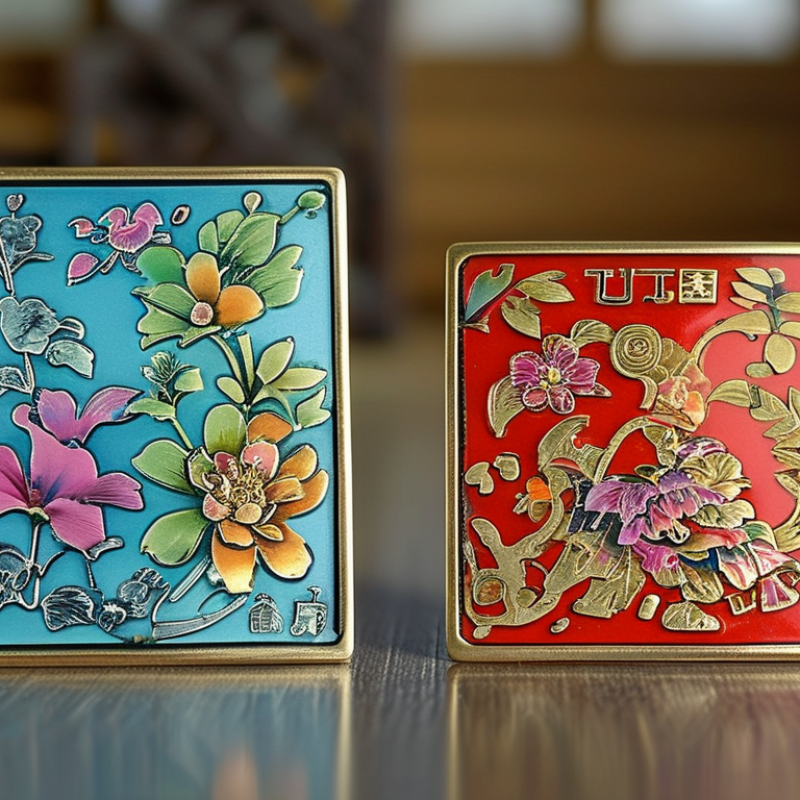
China’s enamel pin manufacturing landscape is broad, but it is not one uniform factory base. Workshops often specialize in soft enamel, hard enamel, die casting, or mixed metal accessories. PPAI’s 2024 Sales Report valued the U.S. promotional products market at about $26.1 billion in 2023. The report does not isolate enamel pins, yet it shows strong demand for customized merchandise.
A reliable supplier should explain mold fees, plating options, color limits, and inspection standards clearly. Request a physical sample before approving bulk production. Check edge smoothness, metal thickness, pin-back strength, and color consistency under natural light. Small details matter. Production records, material declarations, and defect policies also reveal manufacturing discipline. A low quotation can look smart, but it may hide thinner metal or weaker plating.
China’s export network supports flexible ordering and global delivery. The World Bank’s 2023 Logistics Performance Index gave China a score of 3.7 out of 5, ranking it 19th worldwide. Still, logistics performance cannot prove product quality. Ask how the factory controls artwork changes, sample approval, and final inspection. In practical sourcing, communication often matters as much as machinery. Some suppliers respond quickly but document poorly. That gap matters. A careful buyer should compare evidence, not promises. Save approved samples, inspection photos, and written specifications for every order.
Choosing a top enamel pin manufacturer in China requires measurable quality standards, not attractive sample photos. ISO’s 2022 Survey recorded 1,265,216 ISO 9001 certificates worldwide. Certification helps, but it does not replace factory verification. Ask for process records, inspection reports, and batch traceability. Reliable workshops should control mold precision, metal thickness, plating consistency, enamel filling, and polishing. Check a physical sample under bright light. Uneven borders show quickly.
Production capability matters when designs become complicated. Request evidence of color matching, fine-line printing, hard and soft enamel control, and stable repeat orders. A capable factory should explain its minimum order quantity, mold revision policy, sampling time, and daily output. It should also perform pull tests and inspect sharp edges. Small details matter. The PPAI 2023 Consumer Study reported that 88% of consumers remembered the advertiser on a promotional product, making visible defects especially damaging.
For overseas markets, confirm testing requirements before production. Depending on product use and destination, buyers may need checks for restricted substances, nickel release, or coating durability. ISO 9227 salt-spray testing can help evaluate corrosion resistance, although it does not predict every real-world condition. A supplier claiming “perfect quality” deserves more questions. I would request three consecutive samples from separate batches, then compare color, clasp strength, back finish, and logo alignment. One sample can look excellent. Production variation is the harder truth.
Comparing China’s top enamel pin manufacturers requires more than checking unit prices. Grand View Research estimates the global custom pins market will grow at about 6.8% annually through 2030. That growth increases supplier differences. Ask for recent samples, not only polished catalog photos. Compare metal thickness, plating consistency, color accuracy, clasp strength, and edge smoothness. A reliable factory should explain its mold process clearly. Vague answers are a warning.
Production control matters. The ISO Survey 2023 reported China as the world’s largest holder of ISO 9001 certificates, with more than one million registrations. Certification alone proves little. Request the certificate scope and verify whether it covers pin production. Compare inspection records for soldering, enamel filling, polishing, and packaging. Small defects often appear around sharp corners. I have seen attractive samples fail during repeated clasp testing.
Cost comparisons should include mold fees, sampling charges, plating options, packaging, and rejected units. A low quotation may hide weak color matching or loose backs. Ask each manufacturer for a written tolerance standard, such as acceptable pinhole size and plating variation. This step feels slow. It prevents expensive surprises. Review communication speed too, because unclear artwork approval can delay production. No single factory is perfect; even experienced buyers should reassess suppliers after every order.
China Top Enamel Pin Manufacturers: How to Choose?
A sample reveals more than a polished product photo. Check enamel depth, metal edges, plating consistency, and clasp strength under daylight. Rub the surface lightly and inspect loose color or sharp corners. Request samples from different production batches. One perfect sample can mislead. I have seen attractive prototypes hide uneven filling during mass production. Ask for a pre-shipment sample and compare it with the approved version.
Certifications need careful reading. The ISO Survey 2023 reported over 1.26 million valid ISO 9001 certificates worldwide. However, ISO 9001 mainly evaluates quality-management systems, not every pin’s finish. Verify the certificate number, covered factory, validity period, and production scope. A certificate copied into a sales file proves little. Material declarations and plating test reports provide stronger evidence for specific orders. Still, paperwork does not replace physical inspection.
Customer feedback should be measured, not merely counted. The Spiegel Research Center reported that displaying five reviews can increase purchase likelihood by nearly four times. For supplier evaluation, read recent comments with product photos and delivery details. Look for repeated complaints about missing pieces, color mismatch, or delayed replies. Also examine how the manufacturer handles criticism. One negative review may be reasonable. Ten similar complaints suggest a process problem. Reviews can be incomplete, too. Request customer references, but protect confidential information and verify dates before trusting them.
Use this evidence-based comparison framework to evaluate anonymous enamel pin manufacturers without relying on company names or brand claims. A supplier should receive a high rating only when the required evidence is independently checked.
| Evaluation Dimension | Recommended Benchmark | Evidence to Request and Check | Common Risk Signal | Suggested Weight |
|---|---|---|---|---|
| Sample Accuracy | Final sample matches the approved artwork in outline, color separation, plating, pin placement, and back attachment. | Compare the physical sample with the approved vector artwork and a signed specification sheet. Check fine lines, recessed areas, metal edges, and color consistency under normal lighting. | Supplier requests production approval without providing a physical or high-resolution pre-production sample. | 20% |
| Color and Enamel Quality | Smooth, level enamel fill with clean borders and no visible bubbles, pinholes, cracks, or significant color deviation. | Approve a color reference, such as a Pantone code or physical color standard. Inspect at least three samples from the same production batch when possible. | Uneven fill, overflow across metal lines, cloudy translucent enamel, or unexplained color changes between sample and bulk production. | 15% |
| Plating and Surface Finish | Uniform plating with clean edges and no visible scratches, oxidation, peeling, dark spots, or exposed base metal. | Review close-up photographs and inspect the sample from multiple angles. For sensitive applications, request coating or plating test documentation. | Finish varies across the same sample, especially around sharp edges, recessed areas, or the pin back. | 10% |
| Material Disclosure | Base metal, enamel type, plating type, backing material, and packaging materials are clearly identified. | Request a written material declaration and, where relevant, laboratory test reports for heavy metals, restricted substances, or product-safety requirements. | Supplier uses vague descriptions such as “standard metal” or refuses to identify the alloy or coating process. | 10% |
| Quality Management Certification | A valid ISO 9001 certificate can support evidence of a documented quality-management system; it does not automatically guarantee product quality. | Check the certificate number, legal entity, scope, issuing certification body, validity period, and whether the scope covers manufacturing or metal products. | Certificate image is expired, belongs to another entity, has no verifiable certificate number, or lists a scope unrelated to pin production. | 10% |
| Chemical and Product-Safety Compliance | Requirements should match the destination market and intended use. REACH-related substance restrictions may apply in the European market; CPSIA requirements may apply to children’s products in the United States. | Define the destination market, intended age group, and applicable tests before production. Request test reports from an identifiable laboratory with matching product descriptions and dates. | Supplier promises “compliance worldwide” without identifying the regulation, product scope, test method, or laboratory. | 10% |
| Production Capacity and Lead Time | The supplier provides a written schedule covering artwork confirmation, sampling, production, inspection, and shipping. | Compare the quoted schedule with actual milestone dates. Confirm whether lead time begins after deposit, artwork approval, or sample approval. | The quotation gives only one total number of days and excludes sampling, rework, inspection, or holiday delays. | 10% |
| Defect-Control Process | Written inspection criteria define acceptable limits for scratches, color variation, missing enamel, bent posts, loose backs, and packaging damage. | Request a pre-shipment inspection report, defect photographs, approved reference sample, and the agreed replacement or refund procedure. | Quality is described only as “good” or “best” without measurable acceptance criteria or a corrective-action process. | 10% |
| Customer Feedback Quality | Reviews should be recent, detailed, consistent across multiple sources, and specific about sampling, communication, quality, delivery, and issue resolution. | Analyze verified transaction feedback, repeat-order comments, delivery history, customer photographs, and responses to negative reviews. Give greater weight to detailed evidence than star averages. | Only generic five-star comments are available, review dates are unclear, or feedback cannot be linked to comparable enamel pin orders. | 10% |
| Communication and Documentation | Questions are answered clearly, specifications are recorded in writing, and revisions are confirmed before production. | Evaluate response time, technical understanding, revision accuracy, quotation detail, invoice consistency, and willingness to document approvals. | Important details remain only in informal messages, or the supplier changes specifications without written approval. | 5% |
Scoring method: Rate each dimension from 1 to 5 based on documented evidence, multiply by the suggested weight, and compare the total score. Do not treat an ISO certificate, laboratory report, sample, or customer rating as a substitute for the others; the strongest selection combines all four evidence types.
Choosing an enamel pin supplier in China starts with your order, not a factory’s sales promise. Define the artwork, pin size, metal finish, backing type, quantity, and delivery window. A 25 mm soft enamel pin needs different production checks than a detailed hard enamel design. Ask for a digital proof and a physical sample before approving bulk work. Small details matter. Check line thickness, color filling, edge smoothness, and clutch strength. Suppliers that explain these limits usually understand production better.
Experience becomes visible in their questions. A reliable manufacturer should ask about Pantone references, mold charges, packaging, inspection, and acceptable defects. Request photos of similar projects, but confirm which steps are completed in-house. Some factories outsource plating or packing, which can affect timing. Ask for a written quotation with tooling, sampling, unit, freight, and revision costs separated. This prevents a low opening price from becoming an expensive order. Still, quotations can contain unclear assumptions. Read every line.
Choose communication that matches your working style. A supplier should answer clearly, record changes, and report delays before they become urgent. Request a production timeline with approval points and a pre-shipment inspection. For a first order, a smaller trial batch may reveal color consistency and packing quality. It may cost more per piece. That is sometimes useful. Do not choose only by price. Review sample quality, production control, export experience, and after-sales response together. A beautiful sample means little if the delivered batch differs.
Compare metal thickness, plating consistency, color accuracy, edge smoothness, and backing strength. Request recent physical samples. Catalog photos can hide flaws.
A sample shows real colors, metal weight, polished edges, and clasp strength. Inspect it under natural light. Digital proofs are not enough.
The quotation should separate mold fees, sampling, unit prices, plating, packaging, freight, and revisions. Ask about rejected units. Cheap quotes may hide weaker materials.
Request written specifications, inspection records, and defect standards. Ask how artwork changes receive approval. Strong documentation usually indicates better control.
Provide artwork, dimensions, enamel type, metal finish, backing style, quantity, and delivery date. Include color references. Vague artwork creates avoidable revisions.
Check for clean color filling, consistent surfaces, smooth edges, and sharp details. Look closely at corners. Small pinholes can appear there.
No. Certification may not cover pin production or current inspection practices. Verify its scope and request production evidence. Certificates are helpful, not conclusive.
A trial batch can reveal color variation, loose backs, packing problems, and delivery delays. It may cost more per piece. That extra cost can expose weaknesses early.
Clear communication protects artwork, approvals, timelines, and shipment details. Some suppliers reply quickly but document poorly. Fast replies are not enough.
No manufacturer is perfect. Reassess suppliers after every order, even when the first batch looks excellent. Approved samples should remain your comparison standard.
Choosing the right China Enamel Pin manufacturer requires a clear understanding of the country’s diverse production landscape, including small workshops, specialized factories, and large-scale suppliers. Buyers should compare each supplier’s experience, equipment, design capabilities, minimum order quantities, lead times, and ability to handle custom requirements. Quality standards are equally important, so it is essential to review metal materials, enamel color consistency, polishing, plating, backing options, and finishing details before placing an order.
A reliable evaluation should include carefully examining physical samples, confirming relevant quality certifications, and reviewing verified customer feedback. Communication, transparency, pricing, packaging, and after-sales support should also be considered alongside production capacity. The best supplier is not always the cheapest option; it is the one that consistently delivers the required quality, quantity, schedule, and customization level. By comparing several manufacturers and matching their strengths with your project needs, you can reduce production risks and build a dependable long-term supply relationship.
