
10 Tips for Buying 3D Enamel Pins

Time:2026-09-25 Author:Madeline
0%

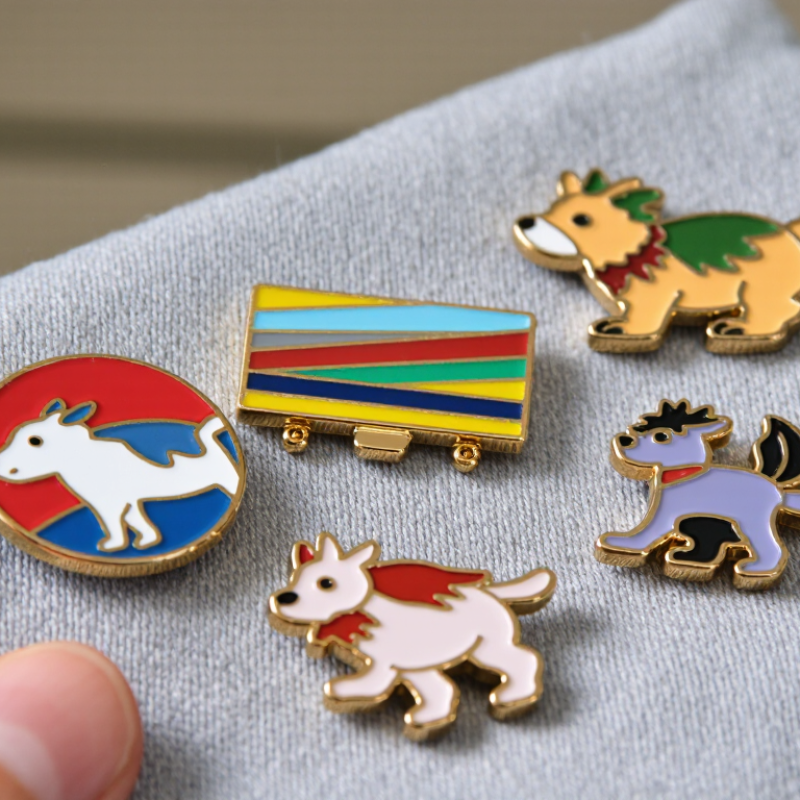
Buying a 3d Enamel Pin can look simple until small production details affect its value. A polished sample may hide weak plating, shallow relief, or rough edges. Buyers need more than attractive artwork. They need a practical way to inspect quality, compare sellers, and avoid disappointing surprises.

Michael McCarthy, an enamel-pin designer and founder of Pinlord, offers a useful principle: “The best pins are the ones people want to wear, not just collect.” That idea matters when reviewing a 3d Enamel Pin. Check whether raised details feel smooth beneath your fingertip. Examine the clasp, metal finish, color separation, and back stamp. Ask for close-up photographs, production samples, and clear measurements. A two-inch pin can feel very different from a one-inch design.

Details matter.

This guide, “10 Tips for Buying 3D Enamel Pins,” focuses on decisions buyers can actually verify. It covers material quality, sculpted depth, paint consistency, packaging, seller communication, and total cost. It also considers practical use. Will the pin sit securely on denim? Could sharp edges catch on fabric? Is the design readable from a short distance?

Some advice is not perfect for every buyer. Collectors may value rarity, while casual buyers may prefer durability and comfort. I would also question impressive claims without evidence. A premium price does not automatically prove superior craftsmanship. Look closely, ask specific questions, and allow room for personal taste. The right 3d Enamel Pin should feel carefully made, honestly described, and worth keeping.
10 Tips for Buying 3D Enamel Pins

Define the Purpose and Style of Your 3D Enamel Pins

Before choosing colors or metal finishes, decide what your 3D enamel pin needs to do. Is it a small award, a keepsake, or a bright accent for a jacket? Its purpose affects size, shape, and how much raised detail will remain visible. A pin worn on a backpack may need a sturdier outline than one displayed in a frame. Keep the main symbol easy to recognize from a few feet away. Small details can disappear quickly.

Think about the style you want people to notice first. Raised metal lines can separate overlapping shapes, while recessed enamel areas add color and depth. For example, a tiny raised star can stand out against a smooth blue field. Choose a limited palette if the design already has several layers. Too many colors can make the pin feel crowded. That is easy to overlook on a bright screen. Review a scaled drawing, not just a large mockup, and ask a maker how narrow lines and small gaps will translate into production. Some detail may need to go. It can be disappointing, but a simpler design often reads better in hand. Define the purpose and style before approving the final artwork.

Choose Suitable Materials, Colors, and Three-Dimensional Details

10 Tips for Buying 3D Enamel Pins

Choose a metal that matches the pin’s purpose. Zinc alloy offers strong edges and supports complex three-dimensional shapes. Iron can reduce costs, but it may need better surface protection against corrosion. Ask about metal thickness, plating quality, and back fastening before ordering. A secure clutch prevents the pin from twisting on fabric. I also check the edges by touch. Sharp borders usually reveal weak finishing control.

Color needs more attention than a screen preview suggests. Request a physical sample or color proof when exact shades matter. Bright enamel can look darker inside deep recessed areas. Strong contrast makes raised details easier to read from a distance. Avoid using many similar colors. They may merge after production. I once approved a digital design that looked balanced, but the finished pin lost two small color sections. That mistake taught me to inspect every narrow fill area.

Three-dimensional details should feel useful, not crowded. Raised lines can define hair, lettering, tools, or facial features. Recessed sections add shadow and visual depth. However, extremely thin relief may disappear during polishing or plating. Ask whether the smallest details can be molded and filled consistently. Compare the sample from different angles. A good pin should still look clear under soft light. Do not judge it only from the front. Leave enough spacing between raised elements, because crowded surfaces often weaken the design’s character.

Material density affects the perceived weight and durability of a 3D enamel pin. Zinc alloy is commonly selected for detailed relief designs because it offers a balance between strength, weight, and moldability. Brass and stainless steel feel heavier, while iron provides a solid, traditional metal structure.

Data shown are approximate typical material densities in grams per cubic centimeter (g/cm³), based on standard engineering material ranges.

Check Pin Size, Shape, Backing, and Attachment Options

10 Tips for Buying 3D Enamel Pins

Tip 1: Measure the pin carefully. A 25 mm pin feels subtle, while a 45 mm pin creates stronger visual impact.

Tip 2: Check the shape against your artwork. Rounded edges hide small flaws, but sharp outlines show them quickly.

Tip 3: Request a digital proof and a physical sample. Screens can make colors look more accurate than they are.

Tip 4: Examine the raised metal lines. They should feel clean, even, and free from rough edges. A tiny flaw matters.

Tip 5: Choose soft enamel for textured color and hard enamel for a smooth, polished surface.

Tip 6: Ask about backing types, including rubber, butterfly, magnetic, or locking backs. The right choice depends on fabric thickness and daily movement.

Tip 7: Check the attachment post length. Short posts may fail on bags or heavy jackets.

Tip 8: Confirm whether two posts are needed for wide or irregular designs. The 2024 PPAI Industry Sales Report valued promotional products at 26.1 billion dollars in 2023, showing why practical attachment choices influence repeat purchasing.

Tip 9: Ask for plating and color specifications in writing. Gold, silver, black, and antique finishes can change the design’s mood.

Tip 10: Review quality-control details, including scratches, loose backs, bent posts, and uneven filling. ISO-style production language sounds reassuring, but it should not replace an actual sample inspection. I would also question overly cheap quotes. They may exclude packaging, revisions, or replacement pieces.

Compare Manufacturers, Samples, Prices, and Minimum Order Quantities

A low unit price can hide expensive surprises. Compare at least three manufacturers using the same artwork, metal, size, plating, and color specifications. Ask for a physical sample before approving production. Check the edge, clasp strength, color fill, and whether fine lines remain crisp. A sample is not a guarantee, though; production batches can vary. I would request written tolerances and a photo of the finished batch before shipment.

Minimum order quantities affect the real price. Ask each supplier for quotes at several quantities, such as 50, 100, and 300 pins, and include mold, sample, packaging, and shipping fees. Then compare the landed cost per usable pin, not just the quoted unit price. McKinsey’s 2020 survey of supply-chain leaders found that 93% planned to make their supply chains more resilient. For pin buyers, that is a reason to assess backup capacity, communication, and realistic lead times—not just price. Small orders may cost more per pin, but they can limit unsold stock. That trade-off is easy to underestimate.

Keep the details visible. Save the approved sample, artwork, quote, and production schedule together. Check whether the quote includes revisions and what happens if colors or dimensions miss the approved specification. I would also ask how the supplier handles defects. It feels fussy. It can prevent a costly mismatch.

Review Production Quality, Packaging, and Delivery Terms

Before ordering 3D enamel pins, request a pre-production sample or sharp photographs of the front, back, and clasp. Check that raised metal lines are even, colors stay within their borders, and the post does not wobble. Small flaws matter. Ask how the maker handles scratched plating, uneven fill, or missing clasps. A written defect policy is more useful than a vague promise of “high quality.”

Packaging protects both the finish and the presentation. Ask whether each pin will sit in a snug backing card, then go into an individual sleeve or compartment. A loose pin can rub against another and leave visible marks. Request a photo of the packed order, not just the finished product. Even careful buyers can overlook this step when focusing on artwork. I would not assume a sturdy-looking mailer guarantees safe packing.

Delivery terms deserve the same scrutiny as the unit price. Pitney Bowes’ 2023 Parcel Shipping Index reported 21.7 billion U.S. parcels in 2022, underscoring the scale of parcel delivery and the value of clear tracking. Confirm whether the quoted timeline covers production, dispatch, and transit separately. Ask for the carrier, tracking method, shipping cost, and procedure for delayed or damaged parcels. Get dates in writing. If the schedule is tight, leave a buffer; production estimates can slip, and I still find that easy to underestimate.

10 Tips for Buying 3D Enamel Pins - Review Production Quality, Packaging, and Delivery Terms

# What to Review What to Ask or Check Practical Buying Check Potential Warning Sign
1 3D relief and artwork detail Request a drawing or sample showing raised and recessed areas from multiple angles. Check that relief levels are intentional and small details remain recognizable at the quoted pin size. The design is approved from a flat image alone, with no clear view of the depth or edges.
2 Enamel style and finish Confirm whether the order uses soft enamel, hard enamel, or a metal-only relief design. Soft enamel typically has recessed color areas; hard enamel is generally polished closer to the metal borders. Confirm the specified finish on a sample. The finish description is vague or differs between the quote, artwork proof, and sample.
3 Metal edges and plating Ask which base metal and plating color are quoted, and inspect the front, back, and edge of a sample. Look for consistent plating color, clean outlines, and edges without obvious burrs or sharp rough spots. The metal finish is not identified in writing or varies noticeably across the sample.
4 Color matching Provide color references and ask how color differences will be reviewed under normal lighting. Approve a physical pre-production sample when color accuracy is important; screen previews can look different from finished enamel. Color approval is based only on an uncalibrated screen image or an unclear description.
5 Size and tolerances Confirm the pin’s height and width, how the size is measured, and the agreed production tolerance. Put measurements and acceptable variation in the order documents rather than relying on a visual estimate. The quote gives only a general size such as “small” or leaves measurement limits unspecified.
6 Backing and attachment Verify the number and placement of posts, the backing type, and whether the attachment suits the pin’s size and weight. Check that posts are aligned and that the backing holds securely without being excessively difficult to remove. The attachment details are missing from the specification or are not shown on the sample.
7 Sample and quality approval Ask whether a pre-production sample is available and agree how defects will be assessed before the order is placed. Review a sample for color fill, relief, finish, attachment, and packaging; retain the approved reference where possible. There is no documented approval point or process for reporting a quality issue.
8 Individual packaging Confirm whether each pin will be packed separately and whether backing cards or other inserts are included. For retail presentation or reduced scratching, specify the packaging material, card dimensions, and any print requirements. “Packaging included” is not defined, or the packing method is unsuitable for the intended use.
9 Production and delivery schedule Request separate estimates for sample approval, production, dispatch, and transit, plus the shipping method. Confirm when the schedule begins, whether transit time is included, and how delays or tracking will be handled. A single delivery estimate is provided without a dispatch date, shipping method, or stated assumptions.
10 Written terms and total cost Check the order quantity, unit price, setup or sample charges, packaging, shipping, payment milestones, and remedy for defective items. Get the agreed artwork, specifications, inspection terms, and delivery details in writing before authorizing production. Important charges, quality expectations, or responsibility for shipping damage are left open-ended.

Note: Production methods, tolerances, schedules, and packaging options vary by supplier. Confirm the specifications and delivery terms for each order in writing.

FAQS

How should I decide the purpose of a 3D enamel pin?

Decide whether it is an award, keepsake, or jacket accent. Its use can affect size, shape, and raised details.

How can I keep a pin design easy to recognize?

Keep the main symbol clear from a few feet away. Small details vanish. Review a scaled drawing before approving the artwork.

How many colors should a 3D pin use?

A limited palette often works better when the design has several layers. Similar shades may merge after production.

What should I check when choosing metal?

Consider the pin’s purpose, metal thickness, plating quality, and back fastening. Zinc alloy supports complex shapes; iron can reduce costs but may need better corrosion protection.

How can I check color accuracy before ordering?

Request a physical sample or color proof when exact shades matter. Recessed enamel can look darker than it does on screen.

What makes raised and recessed details useful?

Raised lines can define features like lettering or hair. Recessed sections add depth and shadow. Keep details spaced apart.

How can I tell if small details will survive production?

Ask whether narrow lines and tiny fill areas can be made consistently. I once trusted a digital preview, and two color sections disappeared.

What should I look for when inspecting a sample?

View it from different angles and under soft light, not only from the front. Feel the edges, too. Sharp borders may indicate weak finishing.

Conclusion

Buying a 3d Enamel Pin starts with a clear idea of its purpose and style. Consider who will use it, where it will be displayed, and what visual qualities matter most. Choose materials and colors that suit the design, and plan raised details carefully so the three-dimensional effect is attractive without making the pin feel crowded. Also check the pin’s size and shape, along with backing and attachment options, to make sure it is comfortable and practical for its intended use.

Before placing an order, compare manufacturers by reviewing samples, production quality, pricing, and minimum order quantities. Ask how the design will be produced and confirm that the finished details match your expectations. Packaging and delivery terms also deserve attention: clear specifications can help protect the pins in transit and keep the order on schedule. Considering these points together makes it easier to choose a design and supplier that fit your needs and budget.

Madeline

Madeline

Madeline is a dedicated marketing professional with a wealth of expertise in our company's core offerings. With a keen understanding of the industry, she brings a unique perspective to her role, consistently delivering high-quality content that highlights the superior aspects of our products. As......