
Choosing the right Pin Badge supplier in 2026 requires more than comparing unit prices. Buyers must examine production quality, communication, ethical sourcing, and delivery reliability. A polished sample can hide weak plating, loose butterfly clutches, or uneven enamel. Your evaluation should begin with physical evidence.
Brandon Chen, founder of Pinlord, offers a useful principle: “A good pin should feel like a small piece of art, not just a logo.” That idea matters when reviewing supplier portfolios. Look closely at line sharpness, metal edges, color consistency, and backing strength. Ask for recent samples, not only edited website images. Confirm whether the supplier manages artwork approval, mold creation, packaging, and inspections internally.
The cheapest quote may become expensive later. Delayed launches, incorrect colors, and damaged shipments can affect customer trust. Request a written quotation with tooling fees, minimum order quantities, sampling costs, production timelines, and shipping terms. Check how the supplier handles revisions. Their response often reveals more than their sales presentation.
Experience matters.
Still, no supplier is perfect. Even experienced manufacturers can miss a detail during busy seasons. A dependable partner admits limitations and explains corrective steps. Review verified customer feedback, business history, factory capabilities, and quality-control procedures. Consider asking for a small test order before committing to a large campaign. It may slow the process slightly. It can also expose problems early.
The best choice balances craftsmanship, transparency, capacity, and support. In 2026, responsible sourcing should be part of that decision. Your Pin Badge represents your brand in someone’s hand, on a jacket, or inside a collector’s display case. That small object deserves careful judgment.
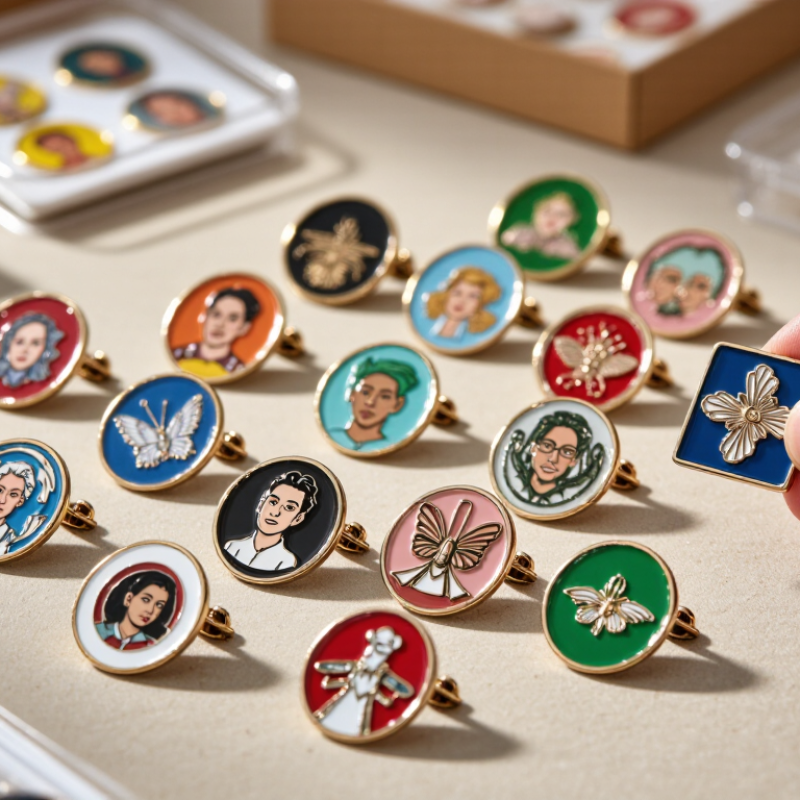
Choosing the right pin badge supplier starts with understanding how suppliers differ. Factory-direct manufacturers usually offer better control over molds, plating, enamel filling, and bulk pricing. Local studios may provide closer communication and faster sample reviews. Trading companies can combine several production options, but their technical knowledge may vary.
Ask what each supplier can actually produce. A capable workshop should explain hard enamel, soft enamel, die-struck, and printed badge methods clearly. Request photos of recent work, not only polished catalog images. Check their minimum order quantity, sample process, color matching method, backing choices, and packaging details. Small details matter. A loose clutch can damage the customer experience.
I once underestimated the value of production updates. The final badges looked attractive, but one plating tone differed from the approved sample. That mistake was avoidable. Reliable suppliers record artwork versions, confirm dimensions, and inspect random pieces before shipment. They should also identify limitations instead of promising everything. Ask how they handle scratches, uneven filling, missing pieces, and delayed materials. A written quality standard helps. It may feel excessive for a small order, yet unclear expectations often create the highest costs. Supplier capability is not just equipment; it is communication, inspection, and honest problem-solving.
Choosing the right pin badge supplier in 2026 starts with a precise design brief. Define the badge size, shape, metal finish, attachment type, and artwork colors before requesting quotes. A 25 mm badge may suit a jacket, while a larger 38 mm badge can display detailed artwork more clearly. Consider how thin lines, small text, and gradients will appear after production. Digital artwork often looks sharper than the finished metal piece.
Quality expectations should be measurable. Ask about metal thickness, enamel depth, plating options, color consistency, and backing security. Request a physical sample when the design includes fine lettering or several colors. Inspect its edges, pin strength, surface scratches, and alignment under normal lighting. Details matter. A supplier should also explain its proofing process, sample approval steps, and quality inspection method. Clear answers usually indicate dependable production control.
Order requirements deserve equal attention. State the exact quantity, target delivery date, packaging needs, and acceptable replacement policy. Small batches may need different pricing and production methods than large orders. Ask whether the supplier can maintain consistent color across repeat orders. My past projects taught me that rushed approvals create expensive corrections, even when the supplier is capable. Build time for artwork revisions and shipping delays. Keep it practical. Compare written specifications, not just attractive product photos, and choose a supplier that documents each production stage clearly.
| Requirement Dimension | Basic Requirement | Standard Requirement | Premium Requirement | What to Confirm with the Supplier |
|---|---|---|---|---|
| Badge Size | Small formats of approximately 15–25 mm, suitable for simple icons and compact promotional use. | Common formats of approximately 25–38 mm, providing a practical balance between visibility and wearability. | Large formats of approximately 38–60 mm, suitable for detailed artwork, event identification, or statement designs. | Ask for a digital size proof and confirm whether the stated size refers to the longest dimension or the overall badge width. |
| Base Material | Iron or steel for cost-sensitive orders and standard metal badge construction. | Brass or iron with a plated surface for a balanced appearance, strength, and cost. | Brass, stainless steel, or other specified alloys when corrosion resistance, weight, or a refined finish is important. | Confirm the base metal, material thickness, plating layer, and whether the material composition can be documented. |
| Design Complexity | Simple shapes, limited colors, and clear linework with minimal small text. | Several color areas, moderate line detail, and lettering that remains legible at the selected size. | Fine linework, multiple color areas, cut-out sections, textured surfaces, or mixed finishes. | Request a pre-production artwork review. Very thin lines and small lettering may lose clarity after reduction or plating. |
| Color Application | Soft enamel with recessed color areas and visible metal borders. | Hard enamel with a smooth, level surface and a polished appearance. | Screen printing, offset-style printing, translucent color, or multiple color techniques for artwork that cannot be reproduced through standard enamel filling. | Confirm color references, acceptable color tolerance, sample approval procedures, and whether separate color setup charges apply. |
| Surface Finish | Bright polished plating or a single standard metal finish. | Antique, matte, brushed, or polished finish selected to support the artwork style. | Combination finishes, selective polishing, sandblasting, dual plating, or textured treatment. | Ask for physical finish samples or high-resolution reference photos taken under neutral lighting. |
| Attachment Type | One standard butterfly clutch for lightweight badges. | Rubber clutch, magnetic backing, or a stronger clutch selected according to daily use. | Two-post construction, locking clutch, safety pin, magnetic backing, or custom attachment hardware for specific applications. | Confirm attachment position, backing strength, post length, hardware color, and compatibility with the target garment or accessory. |
| Order Quantity | Small trial run for design testing, event sampling, or market validation. | Medium production quantity for campaigns, retail releases, clubs, or recurring promotional use. | Large production quantity for national campaigns, distribution programs, or long-term inventory planning. | Request quantity-based pricing, minimum order quantity, setup fees, packaging costs, and the price impact of reorders. |
| Prototype and Approval | Digital proof before production. | Digital proof plus a pre-production sample for designs with several colors or finishes. | Physical sample approval, especially for complex shapes, custom plating, fine details, or high-value orders. | Confirm whether sampling is included, whether sample costs are refundable, and how approval changes affect the production schedule. |
| Typical Production Planning | Allow approximately 7–15 business days after artwork approval for straightforward production. | Allow approximately 10–20 business days when custom molds, multiple finishes, or physical sampling are required. | Allow approximately 15–30 business days for complex construction, detailed approval stages, or larger quantities. | Obtain a written schedule covering artwork approval, sampling, production, inspection, and shipping separately. |
| Quality Control | Visual inspection for incorrect colors, obvious scratches, missing components, and major shape defects. | Inspection of dimensions, plating consistency, enamel filling, attachment alignment, and packaging condition. | Documented inspection plan with approved sample comparison, defect classification, quantity checks, and shipment records. | Ask about inspection standards, acceptable defect limits, replacement policy, inspection photos, and procedures for resolving discrepancies. |
| Packaging | Bulk bags or simple protective packaging. | Individual polybags, backing cards, or separated packing by design and quantity. | Custom cards, retail-ready packaging, barcode labels, protective inserts, and individually counted units. | Confirm packaging dimensions, labeling requirements, packing quantities per carton, and whether packaging artwork requires separate approval. |
| Compliance and Safety | Basic confirmation that the badge is suitable for the intended general use. | Material and coating information suitable for the destination market and intended user group. | Additional documentation for products intended for children, regulated markets, uniforms, or environments with specific chemical restrictions. | Specify the destination country and intended age group. Request relevant material declarations or test reports when required. |
| Supplier Selection Priority | Competitive price, clear communication, and the ability to meet a simple specification. | Reliable sampling, repeatable quality, transparent lead times, and responsive order management. | Stable production capacity, documented quality control, advanced finishing options, secure packaging, and dependable reorders. | Compare complete quotations rather than unit price alone, including tooling, samples, packaging, freight, taxes, and revision costs. |
How to Choose the Right Pin Badge Supplier in 2026?
Material choice affects appearance, durability, and cost. Zinc alloy creates sharp outlines and comfortable weight. Stainless steel resists rust and suits frequent outdoor use. Soft enamel offers recessed color, while hard enamel gives a smoother, glass-like surface. Ask for physical samples, not only digital renderings. Screen colors can look different under workshop lighting.
Production methods also influence consistency. Die striking creates clean relief details for simple artwork. Stamping works well for flat shapes and larger quantities. Casting supports curved forms, but tiny text may lose definition. A reliable supplier should explain mold fees, plating options, color tolerance, and inspection steps. Request photos from different production stages. I once trusted a polished sample too quickly, and the final batch showed uneven edges. That mistake still shapes my supplier checks.
Tips: Compare at least three material samples. Confirm metal thickness and backing type. Ask how defective pieces are handled. Review a pre-production sample before mass production. Keep every specification in writing. Also test the badge on its intended fabric. A heavy badge may pull thin clothing, even when its finish looks excellent. Good customization means more than adding a logo. It includes size, border width, attachment choice, plating tone, and packaging details. Be specific. Tiny decisions matter.
Comparing supplier materials, production methods, and customization capabilities
The benchmark uses a 10-point practical evaluation scale. Hard enamel and die-struck badges generally provide strong durability and premium finishes, while soft enamel and offset printing offer broader color flexibility and detailed customization. Actual results depend on the supplier’s tooling, plating, quality control, and production experience.
Choosing a pin badge supplier requires more than comparing the lowest quote. Ask for a detailed price breakdown covering mold fees, metal type, plating, colors, packaging, and shipping. A supplier offering a very low unit price may add costs later. That happened in one small production project I reviewed. The final invoice included setup charges that were not clearly explained.
Minimum order quantities also matter. Some suppliers accept 50 pieces, while others require 500. Match the quantity to your campaign, event, or retail test. Request physical samples before approving bulk production. Check the badge weight, clasp strength, edge finish, color accuracy, and backing card. Digital proofs can look perfect. Real samples sometimes reveal uneven enamel or rough edges. I still underestimate this step occasionally.
Tips: Request two written quotations. Confirm what the price includes. Ask whether one sample is free or refundable. Get a production timeline with approval, manufacturing, inspection, and shipping dates. For a small order, allow extra time because production may be less prioritized. A reliable supplier should explain delays honestly and provide progress photos when appropriate. Before payment, confirm tolerances, replacement policies, and packaging details. A three-week estimate may become five weeks during busy periods, so build a practical buffer.
Choosing a pin badge supplier in 2026 requires more than comparing unit prices. Reliability appears in small details: stable lead times, clear sampling, and consistent metal finishing. Ask for a written production schedule. Request a physical sample before approving a large order. In my experience, vague answers often become missed updates later. A reliable supplier should explain materials, plating limits, packaging, and replacement procedures. Their compliance documents should be current, traceable, and relevant to your destination market. Do not accept copied certificates without verification.
Reviews can reveal patterns that polished product photos hide. Look for comments about color accuracy, damaged pieces, response speed, and issue resolution. One angry review proves little. Repeated complaints deserve attention. Check whether feedback comes from verified buyers or detailed project accounts. Customer support matters after payment, especially when artwork needs correction or shipment dates change. Test the support channel with practical questions before ordering. Notice whether replies are specific, timely, and written by someone who understands production. A shared proofing process can prevent expensive misunderstandings.
Still, no supplier is flawless. I would record promises, inspect samples carefully, and leave room for human error. That caution may slow the purchase, but it makes quality easier to control.
Factory-direct suppliers usually offer stronger control over molds, plating, enamel, and bulk pricing. Local studios may communicate faster. Trading companies offer broader options, but technical knowledge can vary.
Specify the badge size, shape, metal finish, attachment type, artwork colors, quantity, packaging, and target delivery date. A 25 mm badge suits simple designs. A 38 mm badge shows detailed artwork more clearly.
They should clearly explain hard enamel, soft enamel, die-struck, and printed badge methods. Ask which method suits thin lines, small text, and gradients.
Digital artwork often looks sharper than finished metal. A physical sample reveals edge quality, pin strength, scratches, color accuracy, and alignment.
Ask about artwork versions, dimensions, color matching, random inspections, and written quality standards. Confirm how they handle scratches, uneven filling, missing pieces, and delayed materials.
Check whether the clutch holds firmly and aligns correctly. A loose clutch can damage the customer experience. Test it on real fabric, not only a desk.
Request a written production schedule and sample approval process. Look for repeated complaints about color errors, damaged pieces, slow replies, or unresolved issues.
Ask specific questions about materials, plating limits, packaging, replacements, and delays. Record every promise. I once ignored production updates, and the plating tone differed from approval.
No. Compare written specifications, inspection methods, sampling, support, and replacement policies. Cheap badges can become expensive after rushed corrections or inconsistent repeat orders.
Choosing the right Pin Badge supplier in 2026 starts with understanding the different supplier types and their production capabilities. Some specialize in small custom orders, while others are better suited to large-scale manufacturing. Before requesting quotations, clearly define your design, dimensions, colors, backing style, finish, quality expectations, quantity, and delivery needs. This will help suppliers provide accurate recommendations and pricing.
When comparing options, examine the materials, production methods, customization choices, and quality-control processes available. Pay close attention to minimum order quantities, sample policies, unit prices, tooling fees, and estimated production timelines. A dependable supplier should communicate clearly, provide realistic schedules, protect your artwork, and demonstrate consistent quality through reviews or previous work. It is also important to confirm relevant compliance practices and assess customer support before placing an order. By evaluating capability, value, reliability, and service together, you can select a supplier that delivers attractive, durable badges on time and within budget.
