
Buying Hard Enamel Pins in 2026 requires more than choosing attractive artwork. Global buyers now compare finish quality, production control, ethical sourcing, and delivery reliability. The Promotional Products Association International reported that U.S. promotional products sales reached approximately $26.1 billion in 2023. This figure shows continuing demand for branded merchandise, although it does not measure enamel pins alone. Grand View Research also identifies personalization and corporate gifting as important promotional product trends.
Small details matter.
Hard enamel pins should have smooth, glass-like surfaces, clean metal borders, and accurate Pantone color matching. A one-millimeter error can distort a facial expression or weaken a logo. Buyers should request digital proofs, pre-production samples, plating options, backing security, and documented quality inspections. Recycled metals and responsible packaging are becoming more relevant, especially for European and North American purchasers. However, sustainability claims still need verification. A supplier’s certificate is not automatically proof of responsible production.
Pin designer Megan Lynn Kott once described enamel pins as “small pieces of wearable art.” That observation remains useful for professional buyers. A successful pin must function as both merchandise and storytelling. It should feel substantial in the hand, yet remain comfortable on a jacket, bag, or uniform. Some supplier comparisons remain imperfect because factory data, defect rates, and regional pricing are not always published openly. This guide therefore evaluates practical evidence, not promotional promises. It examines leading 2026 options for global buyers, including design flexibility, finishing consistency, minimum order quantities, sampling processes, packaging, and communication standards. The strongest choice is rarely the cheapest quote. It is the supplier that can repeatedly deliver the approved design.
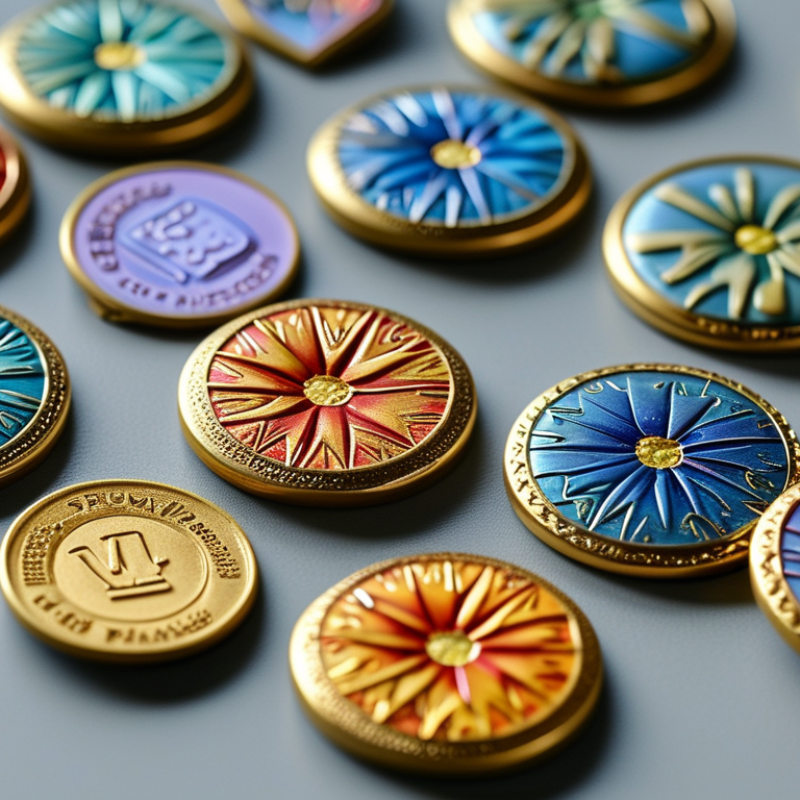
Custom hard enamel pins are metal accessories filled with colored enamel and polished to a smooth, glass-like surface. Their raised metal outlines separate each color clearly. This structure creates a clean, durable finish for uniforms, events, collections, and promotional projects. Unlike soft enamel, hard enamel has no deep textured gaps. Its surface feels almost level with the metal border. Precise artwork is essential because tiny details may disappear during production.
In production reviews, I check the pin size, line thickness, color references, and edge quality. A reliable manufacturer should confirm these details before sampling. Hard enamel usually offers strong resistance to light handling and everyday contact. However, it is not indestructible. Sharp drops, rough storage, or aggressive polishing may damage the surface. A small color mismatch can also change the design’s overall impression. That part is easy to underestimate.
Tips: Use bold outlines and simple shapes for small pins. Request a physical sample when color accuracy matters. Keep text short and readable. Choose secure backings for bags or uniforms. Ask about plating, sample approval, packaging, and inspection standards before ordering. My practical view is simple: attractive artwork alone cannot guarantee a good pin. Production limits matter, and some designs need revision. That may feel inconvenient, but it often prevents costly mistakes for global buyers.
Hard enamel pins begin with a stable metal base, usually copper or iron. Copper supports fine lines, while iron reduces cost for larger runs. The USGS Mineral Commodity Summaries 2025 estimated global copper mine production at about 22 million metric tons in 2024. That figure highlights why responsible sourcing and material traceability deserve attention. Small errors matter. Buyers should request alloy details, plating specifications, and nickel-release test results before production.
Manufacturing usually includes artwork approval, die striking, metal plating, enamel filling, high-temperature curing, polishing, and final inspection. Hard enamel should finish level with the metal borders, not form soft ridges. ASTM B568 provides a recognized method for measuring coating thickness through X-ray fluorescence. ASTM B117 can evaluate corrosion resistance, although it does not define one universal acceptance level. ISO 2859-1 supports statistical sampling for batch inspection, rather than checking only attractive samples. In practical factory work, I would inspect edge sharpness, color consistency, pin-back alignment, and surface scratches under magnification. A perfect first sample can still hide production variation. Buyers should define acceptable quality limits in writing, including color tolerance, plating defects, missing enamel, and packaging damage. These details make quality measurable, not merely promised.
| Category | Data Dimension | Typical Specification or Requirement | Quality Verification | Global Buyer Considerations |
|---|---|---|---|---|
| Product Profile | Hard enamel finish | Colored enamel is filled into recessed metal areas and cured, then the surface is ground and polished level with the surrounding metal lines. | Visual inspection under neutral white light; check for a flat, smooth and glossy surface. | Hard enamel generally provides a more jewelry-like finish than soft enamel, but intricate color areas require sufficient separation between metal lines. |
| Product Profile | Common pin size | Approximately 20–50 mm in the longest dimension for lapel, apparel, event and collectible applications. | Measure the finished pin with a calibrated ruler or digital caliper against the approved artwork and purchase order. | Size affects readability, unit weight, packaging space and shipping cost. |
| Materials | Base metal options | Common bases include zinc alloy, copper or iron. Copper is suitable for detailed die-struck designs; zinc alloy supports cast shapes; iron is commonly selected for cost-sensitive applications. | Review the material declaration and, when required, verify composition through supplier documentation or laboratory testing. | The selected metal influences detail resolution, weight, corrosion behavior and surface appearance. |
| Materials | Metal plating | Typical decorative finishes include gold-tone, silver-tone, black-tone, antique-tone or unplated polished metal. | Inspect color uniformity, exposed-base areas, scratches, stains and adhesion after production. | Decorative plating is not the same as solid precious metal. The exact finish should be approved with a physical sample or color reference. |
| Materials | Enamel color system | Use a documented color reference such as Pantone or an approved physical color standard. The final appearance can vary with enamel batch, curing and metal background. | Compare production samples with the approved color standard under consistent lighting. | Printed artwork colors cannot be assumed to match cured enamel without a color proof or pre-production sample. |
| Materials | Pin attachment | Common options include a butterfly clutch, rubber clutch, magnetic backing or locking clasp. A standard pin commonly uses one or two posts depending on size and shape. | Check attachment alignment, rotational stability, insertion force and retention during a practical pull test. | Locking mechanisms are preferable for heavier pins or products intended for frequent wear. |
| Manufacturing Steps | 1. Artwork and engineering review | Convert the approved artwork into production lines, define dimensions, metal borders, post locations, colors and plating requirements. | Confirm a signed digital proof or technical drawing before tooling begins. | Small text, narrow lines and tightly spaced color areas may need simplification for reliable production. |
| Manufacturing Steps | 2. Tooling or mold preparation | Create a die for stamped metal designs or a mold for cast designs. Tooling geometry must account for relief depth and enamel filling. | Review a tooling proof or first-off metal sample for shape, dimensions and detail. | Tooling is normally a one-time setup cost for a design, while repeat orders may use the approved tool if it remains serviceable. |
| Manufacturing Steps | 3. Metal forming | Stamp, cut or cast the selected metal, then remove excess material and prepare the recessed enamel cells and attachment posts. | Inspect outline, thickness, burrs, deformation, post position and dimensional tolerances. | Recommended tolerances should be agreed in advance; a practical general target is about ±0.2 mm for small pin dimensions, subject to design and process capability. |
| Manufacturing Steps | 4. Surface preparation and plating | Clean and activate the metal surface, apply the specified decorative finish, and protect areas that must remain suitable for enamel bonding. | Check plating coverage, color consistency, adhesion and visible surface defects. | Plating performance depends on substrate preparation, coating system, handling and exposure conditions. |
| Manufacturing Steps | 5. Enamel filling | Dispense hard enamel into the recessed cells according to the approved color map. Avoid overflow, contamination and visible gaps. | Inspect each color cell for complete filling, consistent color, pinholes, bubbles and contamination. | Complex artwork may require multiple filling and curing cycles. |
| Manufacturing Steps | 6. Curing, grinding and polishing | Cure the enamel, grind the surface level with the metal borders, and polish the face to achieve a smooth, even finish. | Check flatness, gloss, edge definition, scratches, grinding marks and color-cell separation. | Over-polishing can soften fine metal details; under-polishing can leave uneven enamel or a dull surface. |
| Manufacturing Steps | 7. Attachment and final assembly | Fit the selected clutch, backing or locking component and verify that posts and attachments are properly secured. | Perform visual inspection and a defined retention or pull test on a sampling basis. | For retail products, the attachment should match the intended use, packaging and safety expectations of the destination market. |
| Quality Standards | Visual acceptance | No sharp burrs, exposed unintended base metal, major scratches, cracks, loose components, severe color mismatch or incomplete enamel filling. | Use an approved golden sample, defect photos and a written inspection checklist. | Acceptance limits should be documented before mass production to avoid subjective disputes. |
| Quality Standards | Dimensional control | Finished length, width, thickness and post spacing should conform to the approved drawing or purchase order. | Measure samples with calibrated digital calipers and record results by batch. | Set tolerances according to product size and function rather than using one tolerance for every design. |
| Quality Standards | Plating adhesion | The decorative coating should remain attached during normal handling and intended use. | Where specified, use a recognized coating-adhesion method such as ISO 2819 or ASTM B571, with the method and acceptance level agreed in advance. | Test results depend on the coating system and substrate; the buyer should request the actual test method and result. |
| Quality Standards | Sampling inspection | Use a documented sampling plan, commonly based on ISO 2859-1, with an agreed lot size, inspection level and AQL values. | Record critical, major and minor defects separately and retain the inspection report. | AQL is a sampling and decision framework; it does not mean that every individual item is defect-free. |
| Quality Standards | Restricted substances | For applicable markets, materials and coatings should meet relevant chemical restrictions, including EU REACH requirements and RoHS requirements where the product falls within scope. | Review supplier declarations and obtain third-party laboratory reports for specified substances when required. | Regulatory scope depends on product use, destination country and sales channel. Compliance claims should identify the applicable regulation and test date. |
| Quality Standards | Nickel release | For articles intended for direct and prolonged skin contact in applicable markets, assess nickel release against the limits specified by the relevant regulation, such as EU REACH Annex XVII Entry 27. | Use an accredited laboratory and the applicable reference test method. | A decorative nickel-free claim should be supported by documented material and test evidence rather than appearance alone. |
| Quality Standards | Children’s product considerations | If marketed as a toy or children’s product, additional requirements may apply, such as mechanical and physical safety, small-parts controls and material testing under the destination market’s rules. | Conduct a product-scope review before testing; use the applicable standards for the intended age group and market. | A lapel pin marketed to adults is not automatically governed by the same requirements as a toy, but marketing, packaging and intended use matter. |
| Packaging | Individual protection | Use a polybag, paper card, foam insert or other suitable protection to prevent face-to-face scratching and movement during transport. | Perform a packing and transit simulation appropriate to the shipping method and product value. | Packaging should protect polished surfaces while meeting the destination market’s labeling and material requirements. |
| Buyer Checklist | Pre-production approval | Approve the artwork, size, metal base, plating, enamel color references, attachment type, packaging, tolerance and inspection criteria before production. | Maintain a dated approval record, signed proof or retained physical sample. | A complete specification reduces color, size, attachment and compliance disputes in international orders. |
2026 Top Custom Hard Enamel Pins for Global Buyers
Design Choices, Finishes, Sizes, and Attachment Options
For global buyers, custom hard enamel pins work best when design decisions begin with manufacturing limits. Use bold outlines and separated color fields for clean metal borders. Tiny text can fill after polishing or become unreadable at small sizes. A 20–30 mm pin suits lapels, bags, and retail backing cards. Larger 35–45 mm formats show mascots, maps, and layered details more clearly. Proofs should show actual line thickness, not only a polished digital mockup. That difference matters.
Hard enamel creates a smooth, glasslike surface after filling and polishing. It feels premium, but fine recessed lines may disappear under heavy color areas. Antique, satin, or polished metal changes the visual mood and affects perceived contrast. Ask for plating samples when color accuracy matters. Attachment choice depends on use: rubber backs suit casual items, while butterfly clutches feel more secure for frequent wear. Magnetic backs look neat, but they may shift on thick fabric. I once underestimated backing pressure on a dense jacket. It was a useful reminder.
Tips: Request a physical pre-production sample for complex artwork. Check pin weight, post length, edge sharpness, and color consistency. Keep one approved sample for future reorders. Small details prevent expensive misunderstandings.
2026 Top Custom Hard Enamel Pins for Global Buyers
How Global Buyers Select a Reliable Pin Manufacturer
Selecting a reliable pin manufacturer starts with visible proof, not attractive promises. Experienced buyers request a physical sample before approving large quantities. They check color accuracy, metal edges, enamel depth, pin-backs, and polishing under normal light. A trustworthy factory should explain its process clearly, from artwork review to mold production and final inspection.
Ask for documented specifications. These should include dimensions, plating options, enamel type, tolerance levels, packaging details, and production timing. Independent test reports can also support claims about material safety and durability. Clear communication matters just as much. Does the manufacturer confirm revisions in writing? Can it explain why a fine line may disappear after molding? Small answers reveal practical knowledge.
I once approved a sample too quickly because the colors looked correct on screen. The finished pins appeared darker in daylight. That mistake taught me to compare physical samples beside the approved color reference. Reliable manufacturers welcome this discipline. They provide progress photos, inspect random units, and report defects instead of hiding them. Still, no supplier is flawless. A reasonable buyer should allow time for correction, especially when designs include tiny lettering or complex shapes. Price matters, but inconsistent quality creates higher costs through delays, replacements, and damaged trust.
How global buyers typically evaluate a reliable custom hard enamel pin manufacturer
Quality consistency and delivery reliability are the strongest selection factors, followed by pricing transparency and sample approval. These benchmark scores reflect common purchasing priorities for international custom pin orders.
Pricing should begin with a complete landed-cost worksheet, not the factory quotation alone. Include mold fees, metal thickness, plating, enamel colors, backings, packaging, freight, duties, and payment charges. Hard enamel usually costs more than soft enamel because its polished surface needs extra finishing. Ask for tiered prices at 100, 500, and 1,000 pieces. Small orders can hide high setup costs. That detail is often underestimated.
Request a physical sample before approving mass production. Check edge smoothness, color accuracy, pin alignment, clasp strength, and card dimensions. Pantone references help, but screens still mislead. A sample may look excellent under white light and weaker under warm light. Photograph it beside the approved color reference. Keep written tolerances for scratches, bubbles, and slight color variation. Perfect consistency is difficult, and buyers should admit that early.
Packaging must protect polished surfaces without creating unnecessary volume. Individual polybags, paper cards, and compact cartons can reduce scuffing and dimensional weight. International shipping needs clear carton counts, net and gross weights, accurate product descriptions, and destination-specific tariff confirmation. The World Bank’s Logistics Performance Index 2023 reports a median 44 hours from port arrival to goods release, showing why clearance planning matters. The UNCTAD Review of Maritime Transport 2024 also highlights continued schedule disruption risks. Choose air freight for urgent launches, but compare it with consolidated ocean freight for larger volumes. Build buffer time. Customs rarely follows the ideal spreadsheet.
Copper supports fine lines and detailed shapes. Iron can reduce costs for larger production runs. Request alloy details before production.
Production includes artwork approval, die striking, plating, enamel filling, high-temperature curing, polishing, and inspection. Each stage can affect the final surface.
Check edge smoothness, enamel depth, color accuracy, pin-back alignment, and scratches under magnification. Compare the sample beside its approved color reference.
Set limits for color variation, plating defects, missing enamel, scratches, and packaging damage. Clear limits make disagreements easier to resolve.
No. A perfect sample can hide variation across a larger batch. Request progress photos, random inspections, and defect reports.
Include mold fees, metal thickness, plating, enamel colors, backings, packaging, freight, duties, and payment charges. Small orders may carry high setup costs.
Individual bags, paper cards, and compact cartons can reduce scuffing. Avoid excessive packaging volume because it may increase shipping charges.
Confirm carton counts, net weight, gross weight, product descriptions, and destination tariffs. Add buffer time. Customs rarely follows the ideal spreadsheet.
Screens and lighting can mislead buyers. A pin may look correct online but appear darker in daylight. I learned this too late.
This guide explains how custom Hard Enamel Pins combine durable metal construction with smooth, polished enamel surfaces to create premium promotional, collectible, and organizational products. It covers common materials, production stages, color filling, polishing, plating, and quality checks that help ensure accurate details, strong adhesion, consistent color, and long-lasting wear. Buyers will also learn how to select suitable designs, finishes, dimensions, backings, and attachment options according to their intended use and visual requirements.
For international buyers, choosing a reliable manufacturer involves reviewing communication, production capabilities, sample quality, inspection procedures, and export experience. The article also outlines the main factors affecting pricing, including size, mold complexity, metal finish, enamel colors, order quantity, and packaging. It highlights the importance of confirming pre-production samples, protective packaging, documentation, shipping methods, delivery schedules, and import-related responsibilities before placing an order.
